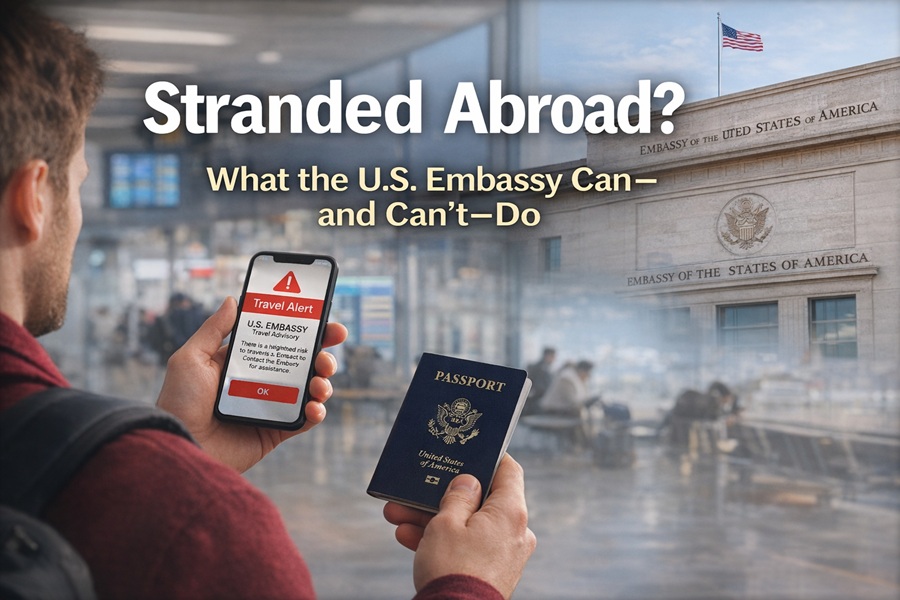
When international crises make headlines - whether wars, political unrest, natural disasters, or sudden travel disruptions - many American travelers start asking the same question:
“What happens if I get stranded overseas?”
While the U.S. government provides assistance to citizens abroad, there are limits to what an embassy or consulate can actually do. Understanding those limits before traveling internationally can save you time, stress, and potentially thousands of dollars.
Here's what U.S. travelers should know about what American embassies can and cannot do if you're stranded abroad.
What the U.S. Embassy Can Do
U.S. embassies and consulates exist primarily to assist American citizens overseas. In emergencies, they can provide a range of services designed to help you regain stability and get home safely.
Replace a Lost or Stolen Passport
One of the most common problems travelers face abroad is losing their passport.
If your passport is lost or stolen, the embassy can issue an emergency passport that allows you to continue traveling or return to the United States. In urgent situations, this can sometimes be done within a day.
Travelers will typically need:
- Proof of identity (if available)
- A passport photo
- A completed application
- Payment of the replacement fee
This is one of the most important services embassies provide to stranded travelers.
Provide Emergency Assistance During Crises
If a war, natural disaster, or political crisis occurs in the country you’re visiting, the embassy may help by:
- Providing safety information and travel alerts
- Coordinating evacuation information
- Sharing updates about airport closures or transportation options
- Helping Americans contact family back home
The embassy’s role is often coordination and information, not direct rescue.
Help Contact Family or Friends
If you’re stranded without access to communication or funds, embassy staff may help you contact family members in the United States who can assist you financially or logistically.
They can also help relay emergency messages.
Provide Lists of Local Resources
Embassies can connect travelers with:
- Local doctors or hospitals
- Attorneys
- English-speaking services
- Local transportation providers
While they cannot recommend specific providers, they often maintain lists to help travelers navigate unfamiliar systems.
Assist in Extreme Emergencies
In rare cases involving large-scale crises, the U.S. government may coordinate evacuation flights or assistance for American citizens.
However, these operations are not guaranteed and may require travelers to pay for their transportation.
What the U.S. Embassy Cannot Do
Many travelers assume embassies function like emergency rescue services. In reality, there are significant limitations.
Understanding these limits is essential.
Pay for Your Travel Home
Embassies cannot buy airline tickets for stranded travelers.
In some cases, travelers may be able to apply for a repatriation loan from the U.S. government to return home, but this loan must be repaid and may restrict passport privileges until it is.
Cover Hotel, Food, or Travel Expenses
Embassy staff cannot pay for:
- Hotels
- Meals
- Local transportation
- Travel delays
Travelers are expected to rely on personal funds, travel insurance, or help from family.
Intervene in Local Legal Matters
If you are arrested abroad, the embassy can:
- Ensure you are treated according to local laws
- Provide a list of local attorneys
- Notify family members if you request it
However, they cannot get you out of jail, represent you in court, or override local law enforcement.
Override Travel Restrictions or Closed Borders
Even during crises, embassies cannot bypass immigration restrictions imposed by foreign governments.
If a country closes its borders or airports, travelers may need to wait until transportation options reopen.
Why the STEP Program Matters
One of the best ways to receive help during an international crisis is by enrolling in the Smart Traveler Enrollment Program (STEP).
STEP allows the U.S. Department of State to:
- Contact you during emergencies
- Send travel alerts and safety updates
- Help locate you if family members are trying to reach you
Enrollment is free and takes only a few minutes online.
For travelers visiting politically unstable regions or areas near conflict zones, STEP registration can be especially valuable.
How Travelers Can Prepare Before Leaving the U.S.
The best way to avoid being stranded abroad is to prepare before traveling.
Experienced international travelers recommend:
- Checking passport expiration dates before booking flights
- Keeping a digital copy of your passport
- Purchasing travel insurance
- Monitoring State Department travel advisories
- Registering with the STEP program
Most importantly, make sure your passport will remain valid for the entire duration of your trip. Many countries require passports to remain valid for at least six months beyond your travel dates.
Final Thoughts
Global events - from wars to sudden political unrest - can disrupt travel with little warning.
While U.S. embassies provide valuable assistance to citizens abroad, their role is primarily to help coordinate solutions, not solve every problem directly.
Travelers who understand these limitations, and prepare accordingly. are far more likely to navigate unexpected disruptions safely.
Ensuring your passport is valid and accessible is one of the simplest but most important steps before any international trip.