With the U.S. currently in the middle of a partial government shutdown, many travelers are understandably wondering whether it could affect their upcoming trips.
The short answer is: yes, it can.
Even when flights are still operating, government disruptions can create ripple effects throughout the travel system - especially at the airport. TSA staffing shortages, longer security lines, identification issues, and checkpoint slowdowns can all cause serious problems before you ever get to the gate.
And while programs like TSA PreCheck and Global Entry can absolutely help in normal conditions, they do not make travelers immune from the kinds of disruptions that can happen during a shutdown or broader airport staffing crunch. Reuters reported that during the current shutdown, unpaid TSA staffing led to unusually high absenteeism, more than 500 officer resignations, and security lines stretching to several hours at some major airports before emergency pay measures helped stabilize operations.
If you're flying soon, here’s what you should know - and how to protect yourself.
Airport Delays Don't Always Start With the Airline
When most travelers think about delays, they think of:
- weather
- mechanical issues
- gate changes
- canceled flights
But many travel problems happen before boarding even begins.
Long security lines, TSA staffing shortages, ID verification issues, and airport screening slowdowns can all cause travelers to miss flights - even if the aircraft leaves on time.
In other words, the problem isn't always your airline.
Sometimes, the biggest delay is simply getting through the airport itself.
Why the Partial Government Shutdown Matters for Travelers
A lot of travelers assume that if the airport is open, everything is functioning normally.
That's not always the case.
Because TSA falls under the Department of Homeland Security, staffing and airport operations can become strained during a shutdown or funding standoff. Over the past several weeks, Reuters reported that the current partial shutdown left about 50,000 TSA officers working without pay, absentee rates climbed to double digits nationally (and much higher at some airports), and some airports saw the longest security lines in TSA’s history.
The good news is that emergency actions have helped restore pay for many TSA workers, and airport operations have improved in many locations. But that does not mean the system is fully back to normal - or that delays can’t return, especially if airport volume spikes or staffing remains uneven. Reuters also reported that Congress still has not fully resolved DHS funding, and some staffing and retention concerns remain active.
For travelers, the takeaway is simple:
A partial government shutdown can still affect your airport experience, even if your flight itself is technically on time.
How TSA Staffing Issues Can Affect Travelers
TSA operations depend heavily on staffing, especially during:
- major holidays
- spring and summer travel peaks
- periods of increased security demand
- times of government funding uncertainty
When staffing is stretched thin, travelers may encounter:
- longer security lines
- fewer screening lanes open
- slower ID checks
- more inconsistent wait times from airport to airport
This doesn’t mean every airport will be chaotic. But it does mean travelers should build in more margin for error than they might during quieter travel periods.
A relatively small delay at security can quickly become a major problem if you’re already cutting it close.
Are TSA PreCheck Travelers Still Affected?
Yes - TSA PreCheck travelers can still absolutely be affected.
PreCheck usually helps you move through security faster by giving you access to a dedicated screening lane and a lighter screening process. In many cases, that still gives travelers a real advantage.
But PreCheck does not guarantee a smooth airport experience.
PreCheck travelers can still run into:
- unusually long lines
- reduced staffing at checkpoints
- lane closures
- airport congestion
- ID/documentation problems
- delays caused by broader airport operations
In some airports, especially during peak travel periods or operational strain, the PreCheck lane can also back up.
So while PreCheck can absolutely help, it should be viewed as a time-saving benefit, not a guarantee against disruption.
Are Global Entry Travelers Affected Too?
Yes - especially on international trips.
Global Entry is designed to speed up your re-entry into the United States after international travel. It can be extremely useful when returning from abroad, but it only helps at specific points in the travel journey.
Global Entry does not help with:
- TSA staffing shortages at standard domestic checkpoints
- airport operational delays
- missed flights caused by long security lines
- problems caused by missing or invalid identification
- flight disruptions before you even leave the U.S.
And it’s worth noting that Reuters reported Global Entry itself was temporarily suspended earlier during this same partial shutdown before later being reinstated, which is a useful reminder that even trusted traveler programs can be affected by government operational strain.
Many travelers assume that because they have Global Entry, they're covered.
They're not.
Global Entry is a convenience tool - not a substitute for having your documents and travel prep in order.
Why Your ID and Travel Documents Matter Even More During Disruptions
When airports are running smoothly, small traveler mistakes can sometimes be survivable. When airports are under pressure, those same mistakes become much bigger problems. This is especially true when it comes to identification and travel documents.
Travelers who show up with:
- the wrong ID
- expired identification
- missing travel documents
- a damaged passport
- confusion about REAL ID requirements
may face delays that are difficult, or impossible, to recover from on the same day.
And if airport staff are already managing heavy traveler volume, there is often less room for flexibility.
REAL ID Confusion Is Still Causing Airport Problems
One of the biggest ongoing travel issues is still ID confusion.
Many travelers remain unsure whether they need:
- a REAL ID
- a passport book
- a passport card
- another form of TSA-accepted identification
The key point is this:
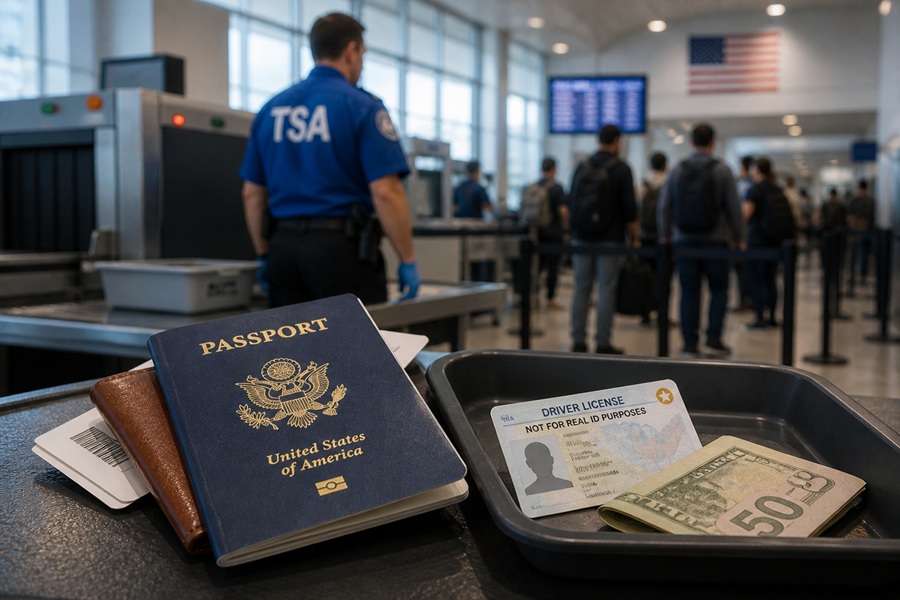
If you do not have a REAL ID-compliant driver’s license, you may still be able to fly domestically with another acceptable form of ID - such as a valid U.S. passport book or passport card.
However, if you arrive without acceptable identification at all, you may face:
- additional screening
- major delays
- possible denial through security
This is one of the most common ways travelers create avoidable airport stress for themselves.
What Travelers Should Do Right Now
If you’re flying during a period of government disruption or airport operational strain, the best thing you can do is remove as many variables as possible before travel day.
Before your next trip, check the following:
1. Is your ID still valid?
Do not assume. Physically check the expiration date.
2. Is your ID acceptable for domestic air travel?
If your license is not REAL ID-compliant, make sure you have another TSA-accepted form of identification.
3. Is your passport in good condition?
This is especially important for international travelers and Global Entry users.
4. Is your Known Traveler Number properly attached to your reservation?
If you use TSA PreCheck or Global Entry, make sure your airline reservation actually reflects that.
5. Are you allowing enough time?
If airport operations are strained, your usual timing may not be enough.
6. Do you have a backup ID?
A second valid form of identification can be extremely helpful if your wallet is lost or something goes wrong before departure.
Why a Valid Passport Can Be a Smart Backup Even for Domestic Travel
Many travelers think of passports only in the context of international travel.
But in today’s airport environment, having a valid passport can also be a very practical backup for domestic flights.
A passport can help if:
- your driver’s license is expired
- your REAL ID hasn’t been updated
- your wallet is lost before a trip
- you need an alternative TSA-accepted ID
A passport card can also be useful for domestic travel and is often overlooked by travelers who assume it’s only for border crossings.
In an environment where airport disruptions and ID confusion are increasingly common, having a second acceptable form of identification can make travel significantly easier.
Final Thoughts
Airport delays don’t always start at the runway. Sometimes they start in the security line, at the ID check, or in the moment you realize too late that your documents aren’t in order. And during a partial government shutdown, those problems can become even more pronounced.
TSA staffing issues, airport slowdowns, and broader government disruptions may be outside your control - but showing up prepared is not. And while TSA PreCheck and Global Entry can absolutely help, they are not a guarantee against delays, congestion, or documentation problems. Before your next trip, make sure your ID is current, your travel documents are valid, and your airport strategy is based on today’s reality - not yesterday's assumptions.